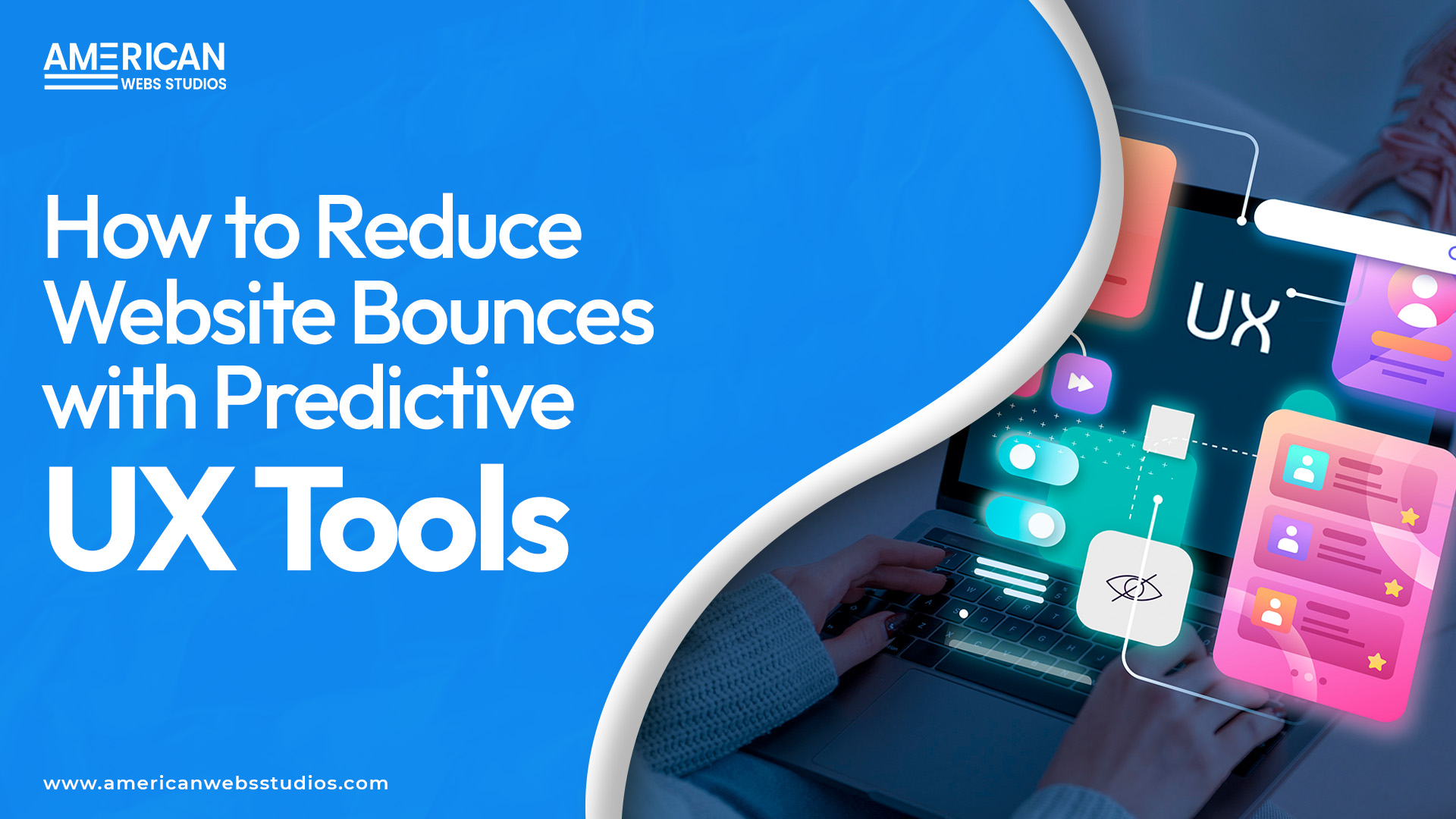
Website traffic is important, but traffic in itself does not guarantee results. What matters is how users behave once they land on your site. A high bounce rate usually means visitors aren't finding what they expect. Predictive UX tools are changing the game, anticipating user behavior and creating experiences that keep visitors longer, leading to measurable bounce reduction.
A bounce happens when a visitor leaves your page right away without doing anything. And that could be due to many reasons: slow loading times, confusing menus, irrelevant content, or a poor mobile experience. Traditional UX improvements depend on old data and manual testing. But now, predictive ux takes it a step further, using data, machine learning, and real-time insights to predict what users want next and deliver it instantly.
Predictive UX tools check out how people act on your site, like where they click, scroll depth, time on page, and navigation paths. Rather than reacting to problems that have already happened, these tools proactively optimize the user journey. They help websites adapt content, layouts, and recommendations based on what a visitor is most likely to do. This way of thinking ahead really helps with bounce reduction because it removes friction before users decide to leave.
Predictive UX lets you change the content to fit what users want. If a visitor indicates interest in a certain service or topic, the site can automatically surface relevant sections, CTAs, or recommendations. This keeps people interested and lowers bounce rates.
Predictive UX tools can simplify navigation by predicting where users want to go next. Suggested links, adaptive menus, and guided journeys reduce confusion and help visitors find what they want quickly, which really helps with bounce reduction.
Not every user interacts with a page in the same way. Predictive UX tools can test and adjust layouts in real time based on behavioral patterns. If users keep leaving a page at the same spot, it can reorganize elements to improve flow and retention.
Predictive UX removes guesswork. And decision fatigue is lowered when users are given the right options at the right time. This creates a much smoother experience, inviting deep exploration, not quick exits.
The real strength of predictive ux lies in its ability to transform raw data into actionable insights. Instead of relying on assumptions, businesses can make UX choices based on what users actually do. Over time, this makes things better, gets people more involved, and keeps bounce rates down.
Reducing bounce rates is not about forcing users to stay; you have to give them a reason to stay. Predictive UX tools help websites seem easy, quick, and helpful. If you use them wisely, they create experiences that fit and align with user needs before users even express them.
At American Webs Studios, predictive ux is viewed as a practical, people-focused way to improve engagement. By focusing on real user behavior and making smart design choices, businesses can turn brief visits into meaningful interactions and lasting results.
Let our experts build a website that works as hard as you do.
GET A FREE QUOTE