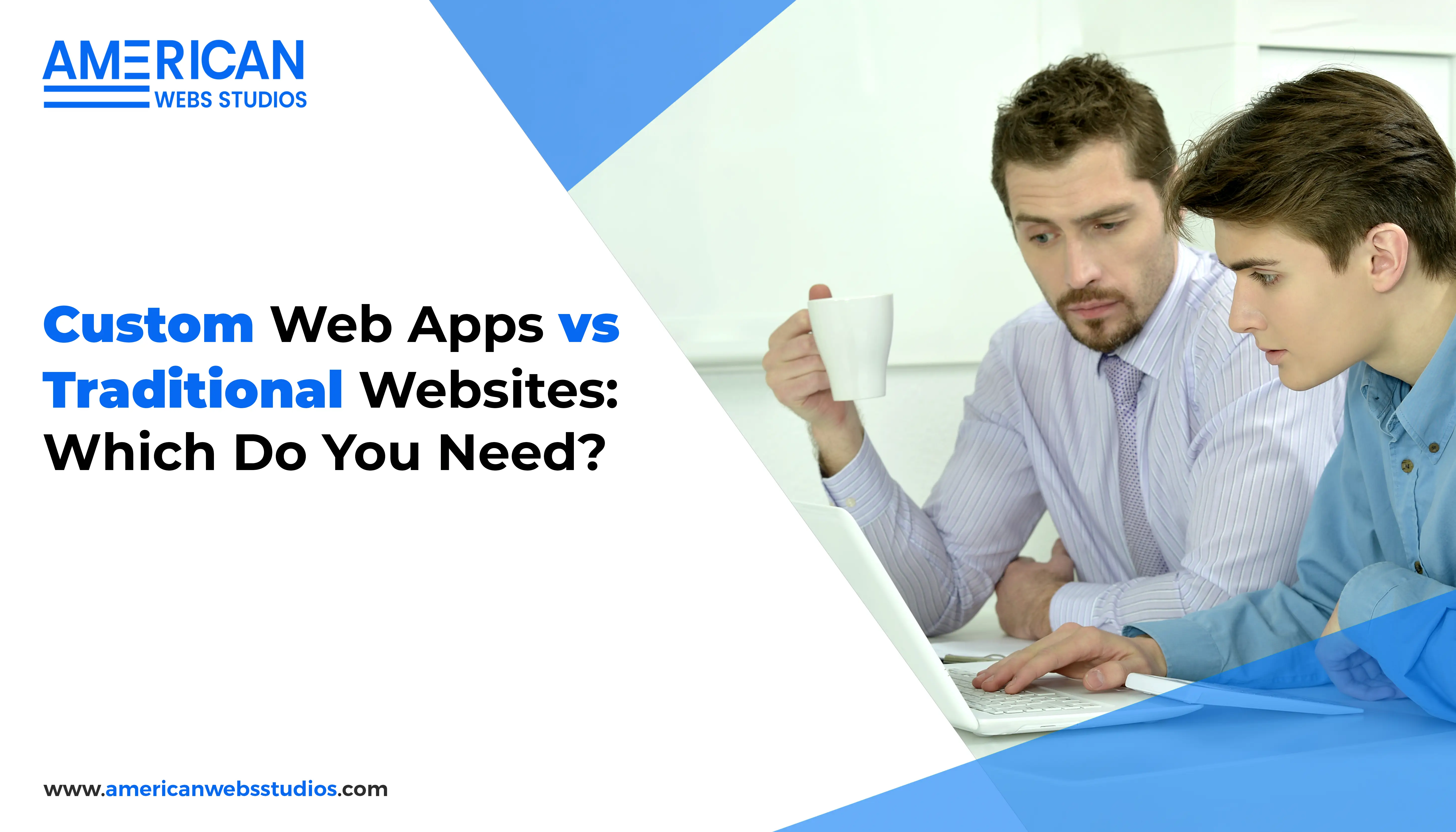
Today's digital-first economy means that having an online presence is no longer a choice; it's a necessity. As a startup, an up-and-coming business, or an established business, the question isn't whether or not you need a website, but instead what kind of digital platform is best for you. This usually boils down to a site comparison between the custom web applications and the traditional websites. Although both can be used to achieve the same goal of linking your brand to the customers, they are very different in terms of their functionality, flexibility, and long-term effects.
A traditional website consists of web pages intended to present information, advertise goods or services, and offer simplified contacts e.g., contact forms, image galleries, or blogs. They are usually not dynamic, but semi-dynamic sites, which are constructed with the help of the content management systems (CMS) such as Shopify or WordPress.
They’re great for:
Custom web applications go a step beyond. As opposed to static websites, web applications are dynamic, interactive sites designed to deal with complex tasks, user interactions, and business processes. A web app might be an online booking system and project management dashboard or a complete e-commerce platform.
Some of the major characteristics of custom web applications are:
Advantages:
Disadvantages:
Advantages:
Disadvantages:
Deciding between a custom web app and a standard website is based on your business objectives.
Consider your long-term vision. Do you envision a straightforward digital presence, or do you require a platform that expands and evolves with your business?
Traditional websites and custom web apps both have their uses, but the best option is what will serve your individual needs. If your only aim is to be visible online. However, when you would like to have a platform that will not only engage its users but also automate and expand with your growth, a custom web application is the right choice. The professionals at American Webs Studios can lead you to the correct path; they can help you create not only a digital presence but a digital advantage.
Let our experts build a website that works as hard as you do.
GET A FREE QUOTE